 Sintra City Guide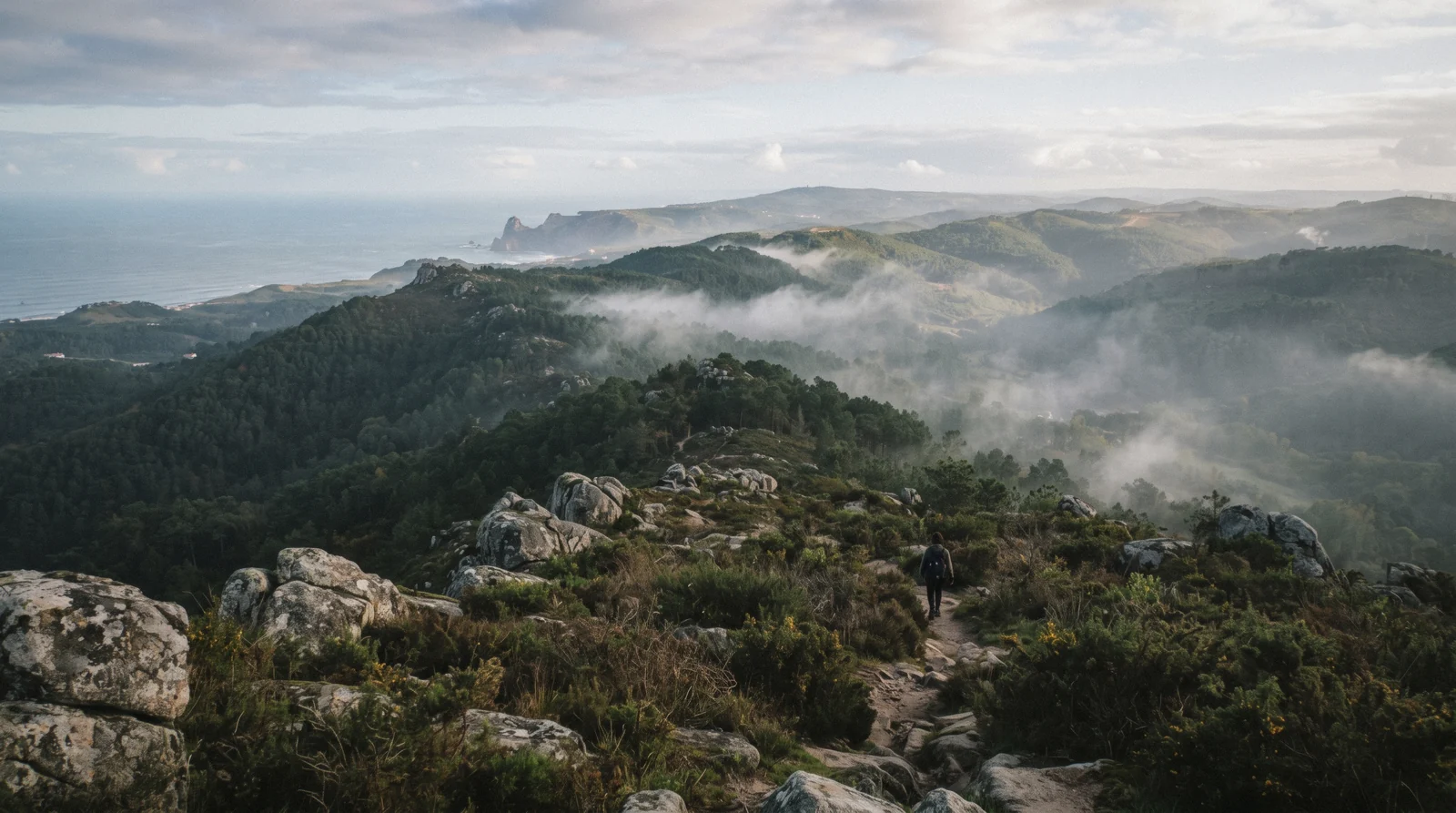
Sintra-Cascais Natural Park
The Sintra-Cascais Natural Park is a protected area of 14,583 hectares that wraps around the town of Sintra and stretches south to the Cascais coast. It is a living landscape of forest, granite hill and Atlantic cliff, not a gated attraction. You can walk much of it for free, and you only pay where specific monuments sit, such as the Park and Palace of Pena and the lighthouse at Cabo da Roca. If your plan involves the park's footpaths, read our hiking guide first, and if your plan involves sand and surf, our beaches page covers the whole coastline. The palaces, tickets and itineraries start from the this independent Sintra guide.
Quick answer Do you need a ticket for the Sintra-Cascais Natural Park?
No. The Sintra-Cascais Natural Park has no park ticket and no gate. It is a protected area of 14,583 hectares across the municipalities of Sintra and Cascais, managed by the national nature agency ICNF, and you walk into it freely. Individual sights inside it do charge, such as Pena and the Moorish Castle, which are run by Parques de Sintra.
Key takeaways
- The park itself is free, the palaces inside it are not. The costs table splits paid sites from free ones.
- The Serra's highest point, Cruz Alta, sits inside Pena Park, so the Pena Palace and Park entrance ticket is the one ticket a summit walker needs. Plan the rest with our hiking guide.
- Waymarked municipal trails cross the park, but check the trail notice before you set out, because the Serra routes have been closed for safety after bad weather.
What Inside the Park Costs Money, and What Does Not
The park has no admission fee of its own. What visitors pay for are the monuments inside it, most run by Parques de Sintra, priced here from its official opening-times and prices page.
| Place | Managed by | Adult price | Hours |
|---|---|---|---|
| Park and Palace of Pena, Essential visit | Parques de Sintra | $23.10 (€20) | Park 09:00-19:00, last admission 18:00. Palace 09:30-18:30 |
| Park of Pena only (Cruz Alta is inside) | Parques de Sintra | $13.84 (€12) | Park 09:00-19:00, last admission 18:00 |
| Moorish Castle | Parques de Sintra | $13.84 (€12) | 09:30-18:00, last ticket 17:30 |
| Park and Palace of Monserrate | Parques de Sintra | $13.84 (€12) | Park 09:00-19:00 (last 18:00). Palace 09:30-18:00 |
| Convent of the Capuchos | Parques de Sintra | $12.69 (€11) | 09:00-17:30, last admission 17:00 |
| Cabo da Roca lighthouse, Essential visit | Parques de Sintra | $5.77 (€5) | Courtyard and interpretation area 09:30-17:30, last admission 17:00 |
| Villa Sassetti | Parques de Sintra | Free | 10:00-18:00 |
| Cabo da Roca clifftop | Open access | Free | No hours |
| Sintra beaches (Adraga, Grande, Maçãs, Magoito, Azenhas do Mar, São Julião and others) | Season fixed by national Portaria | Free | No hours. Lifeguarded season 30 May to 13 September for the six identified bathing waters |
| Municipal PR walking trails | City of Sintra | Free | No hours. Check the trail notice before walking |
Visit Sintra is the source for the free municipal trails, and the Portaria for the beach season. The Chalet and Garden of the Countess of Edla is included in both Pena tickets, and its own entrance gate closes 12:00-14:00. Youth, senior, family and under-6 prices exist at every Parques de Sintra site, see our tickets guide for the full breakdown. Figures current for in Q3 2026.
Tours and Tickets for the Park's Paid Sights
If you want the park's highlights without driving, a tour bundles transport with the paid monuments. Entry is included only where the listing says so, so read each card. These are the cards that match this page's subject.
 from $14.00
Sintra: Pena Palace and Park Entrance Ticket
A skip-the-line entrance ticket to Pena Park and the palace's exterior grounds, with the Chalet of the Countess of Edla and an audio tour included. It does not include the palace interior route, which needs its own separate ticket option.
Check Availability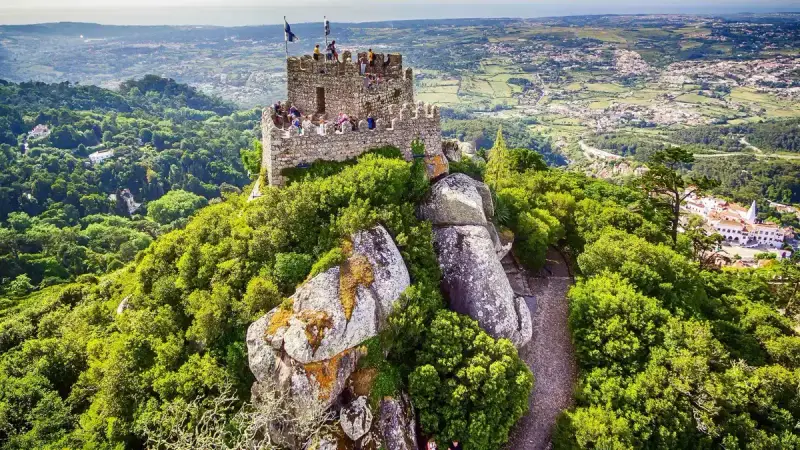 from $13.85
Sintra: Castle of the Moors Skip-the-Line Ticket
A skip-the-line ticket to the 9th-century hilltop ramparts above Sintra, with an audio guide and transportation to the castle included. It is a steep uphill walk once you arrive, so wear real shoes.
Check Availability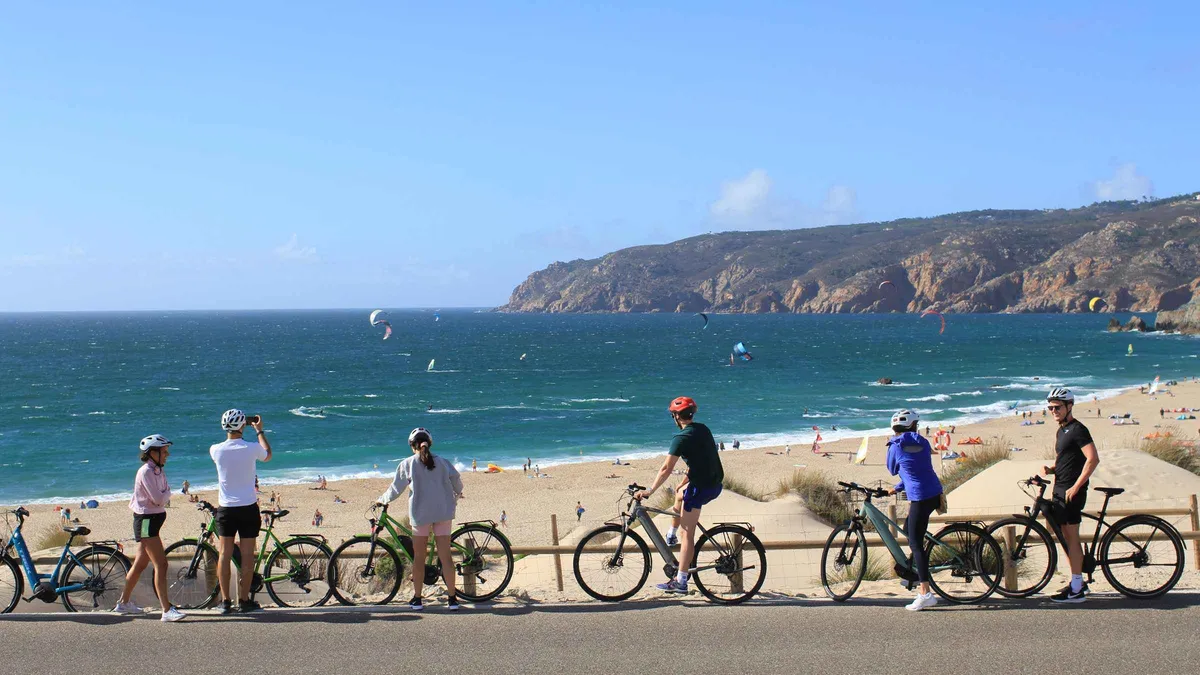 from $92.34
From Lisbon: Sintra to Cascais Full-Day E-Bike Tour
An 8-hour electric-bike tour covering a 40km route from Sintra to Cascais through forests, villages and the coast, with train tickets both ways included and a lunch package for around €20 per person.
Check Availability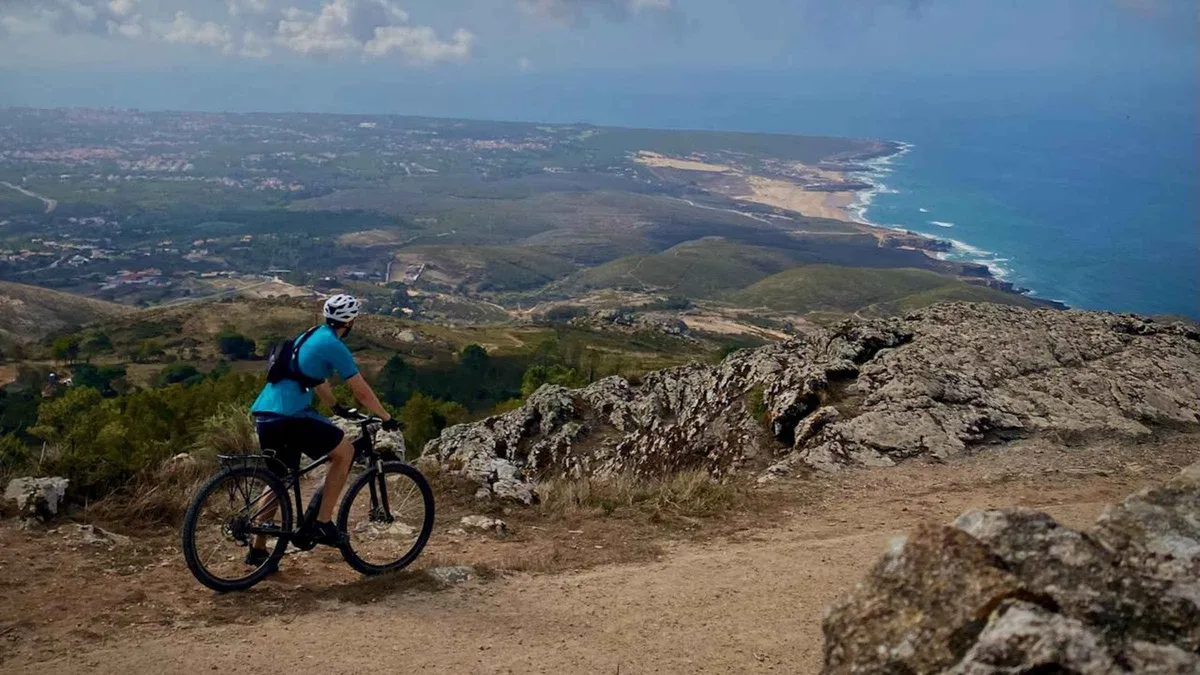 from $98.11
From Cascais: Sintra Guided E-Bike Tour & Guincho Beach
A 4-hour guided e-bike tour from Cascais into Sintra's forest trails, with lunch on Guincho Beach. A reviewer's actual ride ran closer to 6 hours and 25 miles, so it is more workout than a casual pedal.
Check Availability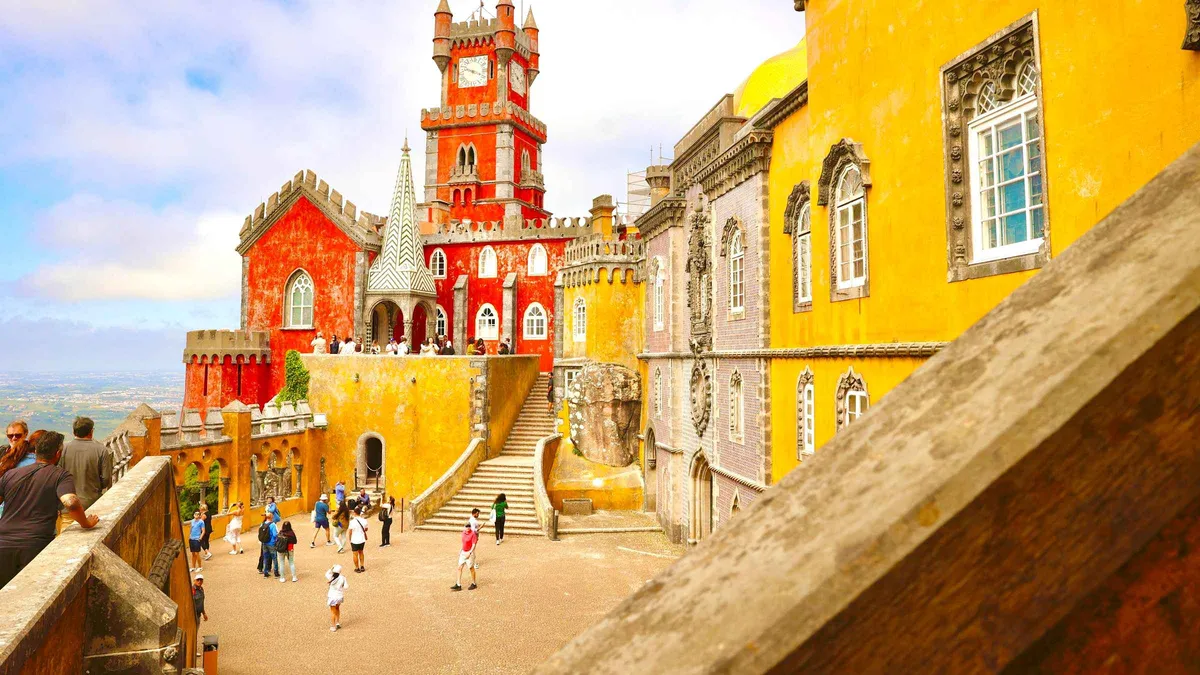 from $78.48
Lisbon: Sintra, Pena, Cascais & Cabo Day Tour With Tickets
A 9-hour small-group day tour from Lisbon with Pena Palace entry included, plus Cabo da Roca and Cascais. If Pena Palace is closed, the operator substitutes a visit to Queluz Palace instead.
Check AvailabilityPrices, ratings and details are the platform's own. dollar figures are the listed prices — the platform bills in your account's currency.
What the Park Is and Who Runs What
Understanding who manages what inside the park saves a lot of confusion at the ticket counter. Three different bodies matter, and their responsibilities do not overlap.
A Protected Area, Not an Attraction
The Sintra-Cascais Natural Park was created on 15 October 1981 by Decree-Law 292/81. That creation date and decree number come to us through a secondary summary of the decree, so we report them as reported by that source rather than from the decree text itself.
The practical consequence for you is simple. There is no entrance booth for the park, no park-wide ticket and no closing time for the landscape as a whole. A hiker on the Serra and a swimmer at Praia da Adraga are both inside the park without having paid anything to be there.
How Big Is It, and Why Do Two Figures Circulate
ICNF, the national nature conservation body that manages the park, gives an area of 14,583 hectares spread across the municipalities of Sintra and Cascais in its own reference document. A larger figure of 23,280 hectares appears in some secondary sources and appears to refer to the wider 1981 protection area rather than the park as later defined. The two figures are not reconciled on any single official page we could read, so we use the ICNF figure throughout this page and flag the other one as unresolved.
Either way, the scale is large. The park runs from the wooded slopes above Sintra town, over the Serra's ridge, and out along the Atlantic coast towards Cascais.
Three Managers, Three Different Jobs
ICNF manages the protected area as a whole. It publishes the park's reference documentation and is the body to treat as the authority on the park itself.
Parques de Sintra, a separate entity, runs the heritage monuments inside and around the park, including Pena, the Moorish Castle, Monserrate, the Convent of the Capuchos, Villa Sassetti and the Cabo da Roca lighthouse. Its own Cabo da Roca page states that Parques de Sintra is not responsible for circumstances outside the heritage sites it manages. Our reading of that sentence is that the clifftop and the coast paths outside its sites are not its remit.
The official network of nature-sports routes, the waymarked hiking and mountain-bike trails inside the park, is set under Portaria 53/2008 of 18 January, the national Carta de Desporto de Natureza, and is administered jointly with the Cascais and Sintra municipal councils. In practice the Sintra walking routes are published and waymarked by the City of Sintra on its Visit Sintra site.
For trip planning, this division of labour means one thing. A question about a palace goes to Parques de Sintra, a question about a trail goes to the relevant city council, and a question about the park as a protected area goes to ICNF.
The Serra's High Points
The Serra de Sintra is the granite hill at the park's heart. Its summits carry viewpoints, a sanctuary and one of the park's quirks, a highest point that sits behind a ticket barrier.
Cruz Alta, the Highest Point Behind a Ticket
Cruz Alta, inside Pena Park, is the highest point of the Serra de Sintra. Parques de Sintra gives the altitude as 528 m, while Visit Sintra's viewpoint page gives 529 m for the same spot. We print Parques de Sintra's figure in the table because Parques de Sintra runs the site, and note the one-metre disagreement so you know both exist.
The cross itself has a layered history. It was first placed around 1522 on the order of King João III. A storm later destroyed it, and King Ferdinand II had it replaced. That replacement was destroyed by lightning in 1997. In 2008 a new cross, replicating an interlaced-log design, was carved from a single block of limestone, 3.5 m tall, 1.5 m wide and weighing about 1,700 kg.
The important practical fact is the ticket. Cruz Alta sits inside Pena Park, so reaching the Serra's highest point requires at least the Park of Pena only ticket at $13.84 (€12). No free municipal trail reaches it.
Miradouro de Santa Eufémia
The Miradouro de Santa Eufémia stands at about 470 m altitude per Visit Sintra's viewpoint listing, which makes it the second named height on the hill in this guide. Visit Sintra's listing says it looks over the municipality from Queluz to the ocean and gives no ticket or access information.
Peninha Sanctuary and PR10
The Santuário da Peninha occupies a ridge on the western side of the Serra, and Visit Sintra lists it as a viewpoint. The municipal PR10 route starts at the Largo da Peninha parking terrace and makes a 5.9 km circuit past the Ermida da Nossa Senhora da Peninha, the Ermida de São Saturnino and the Adrenunes rocks, which resemble a megalithic anta. On clear days the route claims views of the coast from Cabo Espichel to the Berlengas.
Pedra Amarela and Tholos do Monge
Pedra Amarela is a named high-ground feature on the municipal trails, appearing on both the PR6 Rio da Mula route and the PR11 Capuchos route, both of which run along the top of the Serra between Cruz Alta and Peninha. Visit Sintra gives no separate altitude for it, so none is printed here.
On the PR11 you also pass the Tholos do Monge, a collective prehistoric tomb dated 2500/1500 BC and reused in the Bronze Age between 1800 and 800 BC. Nearby stands the Memorial dos Soldados, to soldiers who died fighting the great fire of 1966. Both sit on a free trail.
| Point | Altitude | Access | Source |
|---|---|---|---|
| Cruz Alta | 528 m (Visit Sintra says 529 m) | Inside Pena Park, ticket required | Parques de Sintra |
| Miradouro de Santa Eufémia | About 470 m | Viewpoint, access not described | Visit Sintra |
| Peninha sanctuary | Not stated | Free trailhead at Largo da Peninha, on PR10 | Visit Sintra |
| Pedra Amarela | Not stated | On free municipal trails PR6 and PR11 | Visit Sintra |
| Tholos do Monge | Not stated | On free municipal trail PR11 | Visit Sintra |
The Coast: Cape, Coves and Sintra's Six Lifeguarded Beaches
The park meets the Atlantic at Cabo da Roca and the cliffs around it. Along the Sintra coast, six beaches have a fixed lifeguarded season for 2026.
Cabo da Roca
Cabo da Roca is the westernmost point of mainland Europe, at the end of the Serra de Sintra. The clifftop itself is free. The lighthouse tower stands 22 m high and its light reaches about 26 nautical miles, roughly 48 km, per Visit Sintra. The lighthouse began operating in 1772, making it the second-oldest on the Portuguese coast, and its construction was ordered by the Marquis of Pombal by charter dated 1 February 1758.
Parques de Sintra runs the interpretation area and courtyard at $5.77 (€5) for the Essential visit, or $11.54 (€10) for the Panoramic visit, which adds accompanied access to the tower's balcony. The municipal tourist office at the cape sells a calligraphed Certificate of Presence for $12.69 (€11.00), with a Braille version at $5.19 (€4.50). Our full Cabo da Roca page covers the cape in detail.
Praia da Ursa and the Small Coves
Praia da Ursa lies just north of the cape. Visit Sintra's official beaches list does not include Praia da Ursa, so the municipal tourism site publishes no page, access description or safety note for it. The only official naming of Ursa we found on transport or tourism sites is the Carris Metropolitana bus stop 'Estr do Cabo da Roca (X) Ursa', a junction stop on lines 1253 and 1624, and the operator's beach-lines page, which groups Ursa with Assentiz, Louriçal and Aroeira on lines 1624 and 1253. No official source publishes a trail or safety information for the descent.
The same applies in part to Praia da Aguda, Praia da Samarra and Praia da Vigia, which Visit Sintra does list but describes as unsupervised, with difficult access or a descent down the cliff. Praia da Vigia is known as a naturist beach and connects to São Julião over 2 km of sand at low tide.
Adraga, Grande and the Dinosaur Footprints
Praia da Adraga sits under cliffs north of the cape, with an almost wild setting and an emblematic stone arch, and Visit Sintra describes it as one of the most beautiful beaches in Sintra with excellent water quality. It is also one of the five Sintra beaches holding a Blue Flag for the 2026 season, per the City of Sintra's announcement.
Praia Grande, the largest beach of the Sintra coastline, is the main surf and bodyboard spot and hosts the Bodyboard World Championship each year. Its south end holds something rarer. Dinosaur footprints are preserved in a limestone cliff there, dated to the Early Cretaceous roughly 125 million years ago, before the Sintra mountain range existed. Reported by PROGEO, the Portuguese geosites programme, 66 footprints have been catalogued, 51 of them grouped into 11 trackways attributed to theropod, sauropod and ornithopod dinosaurs. At the end of 2014 the city completed a rehabilitation of the southern access with an observation platform for the footprints, a handrail and a wooden walkway to the sand, per a municipal notice.
The Six Lifeguarded Beaches and Their Season
Portaria n.º 204-A/2026/1, published in the Diário da República on 30 April, fixes the 2026 bathing season for six identified Sintra bathing waters as 30 May to 13 September: Adraga, Azenhas do Mar, Grande, Maçãs, Magoito and São Julião. All six are qualified in the Portaria as 'praia de banhos', which it defines as a beach where lifeguard assistance is ensured during that season. That is the whole, official answer to when you can swim with lifeguards on duty.
Three caveats from the same document and from the municipality. First, Adraga, Azenhas do Mar, Magoito and São Julião are also listed as limited-use beaches in the Portaria annex, while Grande and Maçãs are not. Second, APA publishes information before the season on bathing waters affected by the storms of early 2026, which may carry conditions restricting bathing at the start of the season. Third, Praia da Ursa, Praia Pequena, Aguda, Samarra and Vigia do not appear in the Portaria's list at all, so no bathing season and no lifeguard assistance is fixed for them. Beyond the season itself, five beaches hold the 2026 Blue Flag: Adraga, Grande, Maçãs, Magoito and São Julião. Our beaches page compares them all.
Waymarked Trails Inside the Park
The park's walking network is mostly municipal. The City of Sintra waymarks a set of Pequenas Rotas across the Serra and the coast, Parques de Sintra marks three approach trails to the Moorish Castle, and the Cascais side has its own named routes.
The Municipal Pequenas Rotas
The Pequenas Rotas are self-guided, waymarked on the ground, with information panels and downloadable GPX files. Visit Sintra publishes distances and cumulative ascent for each, but no walking durations for PR1 to PR13. The GR11-E9 is the only route with a published average duration, six hours for its Sintra section.
Durations in the table below appear only where an official source states them.
| Route | Length | Ascent | Start |
|---|---|---|---|
| PR6 Rio da Mula (circular) | About 11.3 km | 664 m | Barragem do Rio da Mula |
| PR7 Cabo da Roca (circular) | About 13.2 km | 497 m | Cabo da Roca |
| PR10 Peninha | 5.9 km | 252 m | Largo da Peninha |
| PR11 Capuchos | 4.9 km | 343 m | Largo dos Capuchos |
| GR11-E9 Caminho do Atlântico (linear) | 29.7 km | 825 m | Azóia |
The Parques de Sintra Approach Trails
Parques de Sintra marks three named trails towards the Moorish Castle. The Santa Maria Trail starts from the Info Parques de Sintra point in São Pedro de Sintra and runs 1,770 m in about 1 h. The Seteais Trail starts at the Palace of Seteais and runs 2,410 m in about 1 h 30.
The Villa Sassetti Trail starts at Largo Ferreira de Castro and runs 1,850 m in about 45 minutes. These are the official pedestrian routes up the hill, and they matter doubly because private vehicles may not drive to the Moorish Castle.
The Cascais-Side Routes
On the Cascais side of the park, the municipal park-trails document names four low-to-medium difficulty routes, PR1 CSC (Rota das Quintas), PR2 CSC (Rota do Cabo Raso), PR3 CSC (Rota das Aldeias) and PR4 CSC (Rota do Litoral do Guincho), plus PR14 CSC-SNT (Rota do Ocidente). Lengths for these routes are not stated in the record we hold, so we print names only.
The Trail Notice You Must Check
Visit Sintra's walking page carries a notice stating that, because of continuous adverse weather, for safety the cycling and walking routes in the Serra de Sintra are not available for use. No reopening date is given. Separately, the official page for PR7 and the GR11-E9 notes that both are impassable between Praia da Adraga and Praia Grande because of works to create the Parque Ecológico Adraga - Praia Grande.
Our reading for planning purposes is this. Do not build a hike on the Serra routes around a fixed date without re-checking Visit Sintra's walking page on the day. The full route profiles are in our hiking guide.
Park Rules: What Is Published and What Is Not
Visitors reasonably ask about dogs, drones, camping and fires. Here is exactly what we can and cannot confirm from official sources.
The Park Regulation We Could Not Read
The park's visitor-conduct rules are governed by the regulation of its Plano de Ordenamento, the management plan, published as a PDF by the Câmara Municipal de Cascais. That document could not be parsed as readable text during our check, and neither could ICNF's primary reference PDF for the park. No official ICNF or municipal page we fetched gives an itemised list of park rules covering dogs, camping, drones, open fires or off-trail hiking in extractable form.
So this page prints no specific park rule as official. Any website listing exact leash lengths or drone ceilings for the park is sourcing them from somewhere we could not verify, and we will not repeat those claims here.
What Does Exist in Writing
Two written sources do bear on conduct. Sintra's municipal animal regulation, the Regulamento de Animais do Município de Sintra dated 24 June 2010, governs dog rules at municipal level, but its specific park-trail leash requirements were not extracted as readable text in our check. And Parques de Sintra's own ticket terms, which apply to its paid sites, forbid entering with food products, forbid admission accompanied by animals, and forbid smoking.
On access, Parques de Sintra states that access to the Moorish Castle is not authorised to private vehicles, and recommends pedestrian trails, public transport and peripheral car parks instead.
How We Suggest You Behave
Without a readable regulation, our practical reading is to follow the rules that are published, stay on marked trails on the municipal routes, and treat the paid sites' ticket terms as the strictest standard. If a specific park rule matters to your trip, contact ICNF or the relevant city council directly rather than trusting a blog.
Weather Closures on the Hill
The Serra's weather can close the park's paid monuments at short notice. This is not theoretical.
The 16 December 2025 Example
On 16 December 2025, Parques de Sintra closed the Moorish Castle, the Park and Palace of Pena, the Park and Palace of Monserrate and the Convent of the Capuchos on the same day, due to strong winds and adverse weather in the Sintra mountains. The pedestrian Vila Sassetti entrance was also shut, and road access was restricted to buses removing remaining visitors. The official notice gave no reopening date.
The lesson is straightforward. In autumn and winter especially, re-check the Parques de Sintra notices page on the morning of your visit. A full hilltop itinerary can evaporate overnight, and no amount of pre-booking changes what wind does to a castle rampart.
Forecasting the Hill Is Its Own Problem
IPMA, the national weather service, has no climate station in Sintra's historic centre or on the Pena and Monserrate hillside within its official 1991-2020 normals network. The nearest station in the municipality is at Cabo da Roca, on the coast, which is cooler and less rainy in summer than the slopes above the town. So coastal forecasts and hill forecasts are not the same thing, and a specific fog-days figure for the hill cannot be sourced to an official page.
Read more in our best time to visit guide.
Getting Into the Park Without a Car
You can reach the park's main gateways entirely on public transport from Lisbon, and the coastal side from Cascais.
Train from Lisbon
CP's urban trains run from Lisbon's Oriente, Rossio and Entrecampos stations to Sintra. The official CP price list fixes a return ticket Lisboa-Sintra at $5.88 (€5.10). You need a reusable Navegante card to load it on, which costs $0.58 (€0.50) and is valid for one year from first use.
Our Lisbon to Sintra page walks through the journey in full.
Buses Into the Park
From Sintra station, three lines matter most for the park's paid sights. Bus 434 (Scotturb, the Circuito da Pena) runs from the station through the historic centre up to the Moorish Castle and Pena. Bus 435 (Scotturb, Circuito Regaleira-Monserrate) runs from the station via Quinta da Regaleira and the Seteais area to Monserrate, with the Lourel car park as a boarding point for Monserrate per Parques de Sintra. For the coast, Carris Metropolitana line 1253 runs from Sintra (Estação) via Monserrate and on to Cabo da Roca, and line 1624 runs from Cascais (Terminal) via Azóia and Almoçageme towards Portela de Sintra.
In the operator's timetable data, the Cabo da Roca stop on line 1253 was 41 to 51 minutes after departure from Sintra (Estação), and Cabo da Roca was 31 to 33 minutes from Cascais (Terminal) on the 1624 variants that serve it. Current 2026 frequencies are not readable in simple form on the operator's site, so confirm times on the day. One practical gap, Praia da Adraga is not listed on Carris Metropolitana's official beach-lines page, so no direct line number to it is printed here.
- Bus 434 (Scotturb): Sintra station to Moorish Castle and Pena
- Bus 435 (Scotturb): station to Regaleira, Seteais and Monserrate, also from the Lourel car park
- Line 1253 (Carris Metropolitana): Sintra (Estação) via Monserrate to Cabo da Roca
- Line 1624 (Carris Metropolitana): Cascais (Terminal) via Azóia to Portela de Sintra
- Beach lines from Portela de Sintra: 1254 to Magoito (Praia), 1248 to Praia das Maçãs, plus 1242 and 1247 per the operator's beach page
On the Ground
Once inside the park, the municipal waymarked trails and the Parques de Sintra approach trails connect the main points on foot, and the City of Sintra runs a free shuttle connecting the peripheral Portela de Sintra and Cavaleira parking areas to Sintra train station every 7 minutes between 9:00 and 20:00, with a 24-seat wheelchair-accessible vehicle. Buses in the area and general logistics are covered on our getting around page.
Map of the Park's Trailheads and Gateways
Trailhead coordinates come from Visit Sintra's official walking page, the beach from Visit Sintra's GPS data, and the station from the Carris Metropolitana stop data.
Pin positions are as published in the cited official sources. Zoom out to see how the trailheads relate to the coast.
Next Stops From the Natural Park
Three pages that pair naturally with the park.
Hiking in Sintra
Distance and climb for every official Sintra trail, from the town loops to the GR11-E9. Start there if the trail notice affects your plans.
Same areaConvent of the Capuchos
The 1560 convent sits on the PR11 route and charges $12.69 (€11) for admission. It closes at 17:30, earlier than Pena.
Inside the parkCabo da Roca
The westernmost point of mainland Europe, with a free clifftop, a ticketed lighthouse and a tourist office selling certificates of presence.
Park's west edgeSintra-Cascais Natural Park Questions
Do you need a ticket for the Sintra-Cascais Natural Park?
No. The park has no admission fee, no gate and no closing time. You only pay for specific sites inside it, such as Pena and the Moorish Castle. The costs table on this page lists every price.
How big is the Sintra-Cascais Natural Park?
ICNF's own reference document gives 14,583 hectares across the municipalities of Sintra and Cascais. A larger 23,280-hectare figure circulates in secondary sources and is not reconciled with the ICNF figure on any single official page. See what the park is.
What is the highest point in the park?
Cruz Alta, at 528 m per Parques de Sintra, is the highest point of the Serra de Sintra. It sits inside Pena Park, so reaching it requires a park ticket. See the high points section.
Can you hike in the Sintra-Cascais Natural Park?
Yes, on a network of waymarked municipal trails, the Parques de Sintra approach paths and the Cascais-side routes. But Visit Sintra's walking page currently carries a notice that the Serra de Sintra walking and cycling routes are unavailable for safety after adverse weather, with no reopening date. Check the trails section and our hiking guide before you go.
Can you get to the Sintra-Cascais Natural Park from Lisbon by public transport?
Yes. The CP train from Lisbon to Sintra has a fixed return fare of $5.88 (€5.10), and from Sintra station buses 434 and 435 climb into the park while line 1253 runs to the coast. Full detail is in getting in without a car and our Lisbon to Sintra guide.
Are dogs allowed in the Sintra-Cascais Natural Park?
The park's own regulation could not be read as text during our check, so no park-wide dog rule is printed as official here. What is published: Parques de Sintra's ticket terms bar animals from its paid sites. For the Moorish Castle specifically, that page on this site covers its own dog rule.
Can the park close in bad weather?
Yes, the paid sites can. On 16 December 2025 Parques de Sintra closed Pena, the Moorish Castle, Monserrate and the Capuchos in one day for strong winds, with no reopening date in the notice. See weather closures and our best time to visit guide.
The Sintra-Cascais Natural Park on Film
Three films that cover the park's mix of hill, forest and coast, from a road trip overview to a long walk across it.
Things to do in Sintra Cascais Natural Park Portugal
A road-trip overview of what the park holds, from the hill to the coast.
Video: ZigZag Road TripsSintra-Cascais Natural Park, Portugal
A walking documentary through the park's landscape.
Video: WZRDUK | Walking Tours & Travel DocumentariesHiking 30 Miles In Sintra-Cascais Natural Park
A long-distance hike across the park, for a sense of the terrain.
Video: Garrett VercoeVideos load from YouTube only when you press play.
Prices, hours and terms are set by the venue or operator and confirmed at checkout.
We may earn a commission if you book through one of our links, at no extra cost to you. Full affiliate disclosure